If your home isn't connected to a city sewer line, chances are you have a septic system. Millions of homes across the U.S. — especially in rural areas like Snohomish and Skagit County — rely on septic tanks to treat and dispose of household wastewater. But most homeowners don't fully understand how their system works until something goes wrong.
Here's a straightforward guide to what a septic tank actually is, how it works, and what you need to know to keep it running for decades.
What Is a Septic Tank?
A septic tank is a buried, watertight container (usually concrete, fiberglass, or polyethylene) that receives all the wastewater from your home — toilets, showers, sinks, laundry, and dishwashers. Its job is to hold that wastewater long enough for solids to settle to the bottom (forming sludge) and for oils and grease to float to the top (forming scum).
The liquid layer in the middle — called effluent — then flows out to the drain field, where it's naturally filtered through the soil before returning to the groundwater.
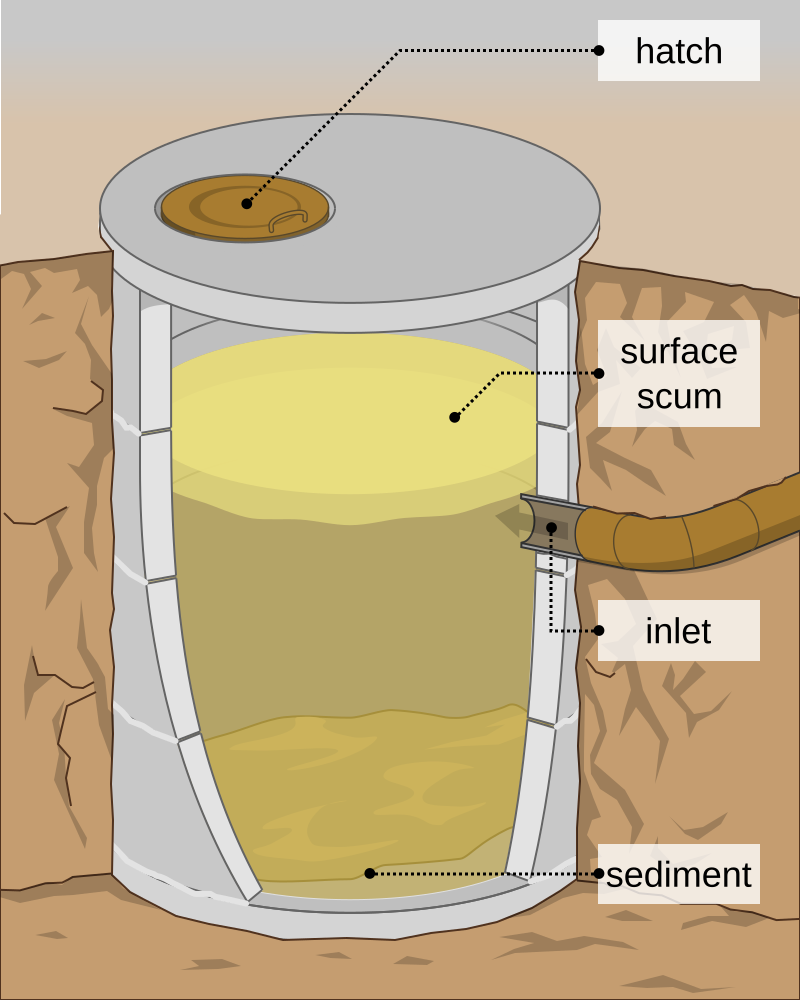
The Key Components
A complete septic system has several parts working together:
- Inlet pipe — carries wastewater from your home to the tank
- Septic tank — the main container where solids separate from liquids
- Baffles — internal walls that prevent scum and sludge from flowing out with the effluent
- Outlet pipe — carries clarified effluent from the tank to the drain field
- Drain field (leach field) — a network of perforated pipes in gravel-filled trenches where effluent is slowly released into the soil
- Soil — the final treatment layer, where bacteria in the ground break down remaining contaminants
How Does It Actually Work?
The process is surprisingly simple — and relies mostly on gravity and biology:
- Wastewater flows in. Everything that goes down a drain in your home enters the tank through the inlet pipe.
- Solids settle, grease floats. Heavy solids sink to the bottom (sludge). Fats, oils, and light materials float to the top (scum). This separation happens naturally over 24-48 hours.
- Bacteria break things down. Anaerobic bacteria (bacteria that live without oxygen) in the tank decompose much of the solid material. This is why tanks don't fill up instantly.
- Effluent exits to the drain field. The middle liquid layer flows out through the outlet pipe, which is positioned to draw only from the clarified zone between scum and sludge.
- Soil filters the rest. As effluent trickles through the drain field soil, bacteria, viruses, and nutrients are removed naturally. By the time it reaches groundwater, it's been effectively treated.
Why Maintenance Matters
Even though bacteria break down a lot of the solids, they can't break down everything. Over time, sludge accumulates on the bottom and scum builds up on top. If these layers get too thick:
- Solids can escape into the drain field, clogging the soil and causing system failure
- Wastewater can back up into your home
- The drain field can become permanently damaged (requiring expensive replacement)
- Untreated sewage can surface in your yard or reach groundwater
Regular pumping removes the accumulated sludge and scum before they cause problems. For most households, this means pumping every 3-5 years.
Warning Signs Your Tank Needs Attention
- ⚠️ Slow drains throughout the house (not just one fixture)
- ⚠️ Gurgling sounds in your plumbing
- ⚠️ Sewage odor near the tank or drain field
- ⚠️ Standing water or unusually green grass over the drain field
- ⚠️ Sewage backup in the lowest drains (basement, ground floor)
If you notice any of these, don't wait — call for service before a minor issue becomes a major repair.
How Long Does a Septic Tank Last?
With proper maintenance, a well-built septic tank can last 20-40 years. Concrete tanks tend to last the longest. The drain field typically lasts 15-30 years, but neglect can shorten that dramatically. The single biggest factor in system longevity is consistent, on-schedule pumping.
The Bottom Line
A septic tank is a simple, reliable system — but it's not maintenance-free. Regular pumping every 3-5 years, being mindful of what goes down your drains, and paying attention to warning signs will keep your system healthy for decades. Ignore it, and you're looking at $10,000-$30,000 for a full system replacement.
Due for a Pump-Out?
If it's been 3+ years since your last pumping, or you're not sure when it was done — give us a call. We'll give you an honest assessment.
(360) 913-5773